postmodernist
postmodernist
paradox
paradox
postmodernist
paradox
Visual Design
Editorial Design
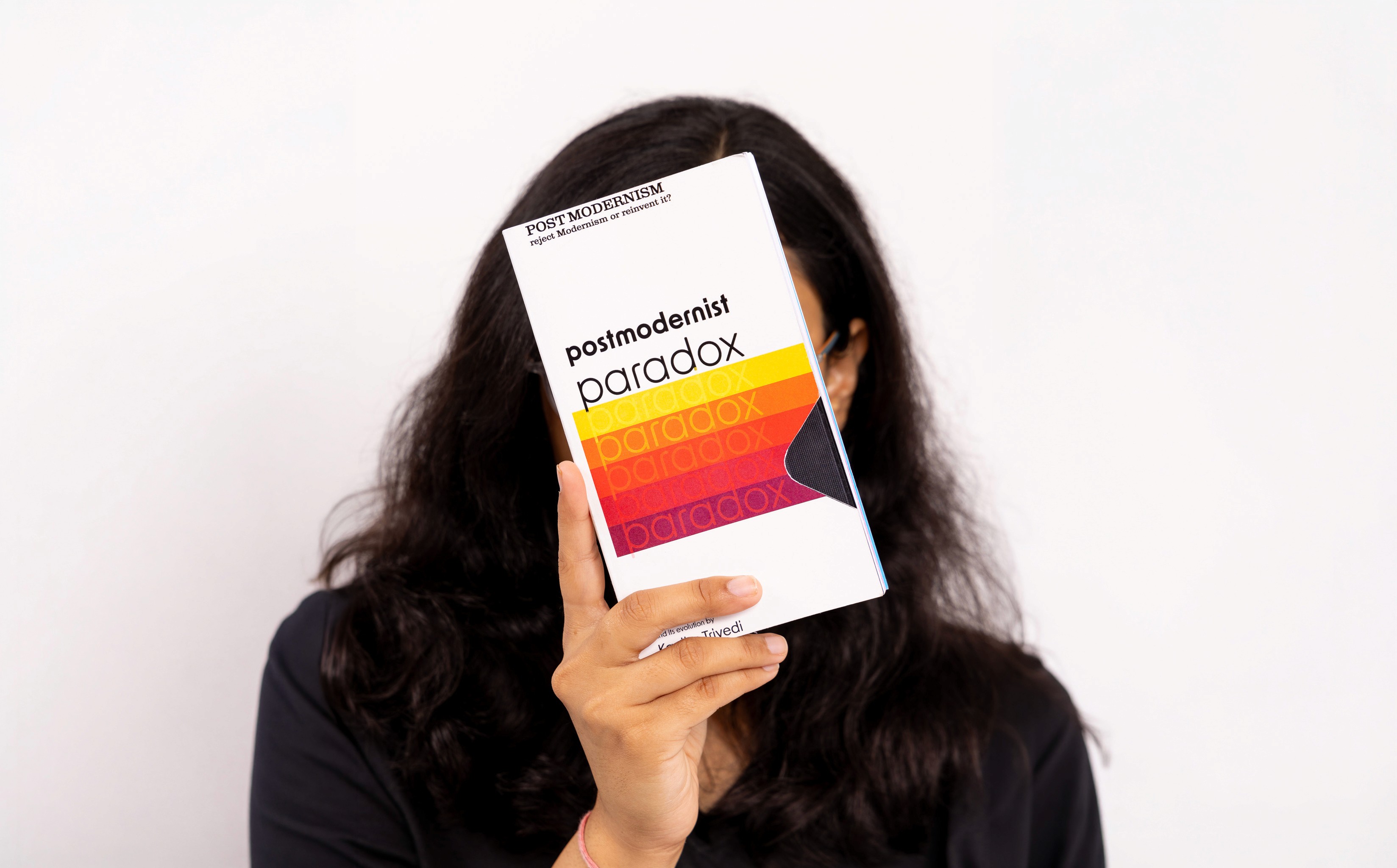
Open the cover and there's a VHS tape inside, labelled by hand. On the first page its reel has barely begun to turn; by the conclusion it is fully wound. The tape carries the argument the book makes: that postmodernism didn't kill modernism, it reinvented it, and named a third movement neither side accounts for. Form and content reach the same conclusion together.

Project Overview
Client: LaunchPad, a seed-stage no-code startup
Industry: Website Builder, Founder Tools
Timeline: 10 weeks (2023)
An editorial design project, self-authored and self-designed, making a case most design history skips: postmodernism didn't kill modernism. It reinvented it.
The argument runs through every layer of the book as an artifact— the writing, the typography, and a VHS tape bound inside the cover that physically tracks the thesis from first page to last.
Project Overview
Client: LaunchPad, a seed-stage no-code startup
Industry: Website Builder, Founder Tools
Timeline: 10 weeks (2023)
An editorial design project, self-authored and self-designed, making a case most design history skips: postmodernism didn't kill modernism. It reinvented it.
The argument runs through every layer of the book as an artifact— the writing, the typography, and a VHS tape bound inside the cover that physically tracks the thesis from first page to last.
My Role: Researcher, Author, Designer
Author: Wrote the original research paper and built the thesis from the ground up.
Designer: Designed the full book, where every formal decision performs the argument.
Theorist: Named and argued for a third movement, Essential Design, within the modernism debate.
THE BOOK
RESEARCH PAPER
My Role: Researcher, Author, Designer
Author: Wrote the original research paper and built the thesis from the ground up.
Designer: Designed the full book, where every formal decision performs the argument.
Theorist: Named and argued for a third movement, Essential Design, within the modernism debate.
THE BOOK
RESEARCH PAPER
3 Acts
Modernism, postmodernism, and the resolution the book names for itself.
3 Acts
Modernism, postmodernism, and the resolution the book names for itself.
1 New Term
Essential Design The humanist ethos this book argues for.
1 New Term
Essential Design The humanist ethos this book argues for.
1 VHS Tape
Bound inside the cover, winding from empty to full as the argument resolves.
1 VHS Tape
Bound inside the cover, winding from empty to full as the argument resolves.


THE QUESTION
Did postmodernism reject modernism — or reinvent it?
The thesis
“Postmodernist upheaval reinvented Modernist ideologies as the technology advanced.”
The book argues against two stories everyone accepts: that modernism died and postmodernism replaced it, and that we now live somewhere past both. It names a third thing instead — Essential Design, the humanist ethos that emerged when technology disciplined postmodernism’s chaos, and both movements landed on the value they were always circling: human connection.
THE QUESTION
Did postmodernism reject modernism — or reinvent it?
The thesis
“Postmodernist upheaval reinvented Modernist ideologies as the technology advanced.”
The book argues against two stories everyone accepts: that modernism died and postmodernism replaced it, and that we now live somewhere past both. It names a third thing instead — Essential Design, the humanist ethos that emerged when technology disciplined postmodernism’s chaos, and both movements landed on the value they were always circling: human connection.
THE PROCESS
From paper to the artifact
The brief asked for a research paper. Most designers would stop there. The decision to extend the argument into a fully designed, printed book — to make the object itself part of the argument — is what changed the project.
It moved in three stages: a concept map in Miro tracing every node between the movements and the thinkers who shaped them; the writing, structured in three acts; and the design, where the visual concept came directly from the argument itself.
THE PROCESS
From paper to the artifact
The brief asked for a research paper. Most designers would stop there. The decision to extend the argument into a fully designed, printed book — to make the object itself part of the argument — is what changed the project.
It moved in three stages: a concept map in Miro tracing every node between the movements and the thinkers who shaped them; the writing, structured in three acts; and the design, where the visual concept came directly from the argument itself.


THE DESIGN
The object argues before it opens
The cover repeats “paradox” six times, fading from black through a warm gradient into a geometric wedge — the same word transformed by context, the way the same roots gave two different movements. It doesn’t illustrate the thesis. It performs it.
Inside, the typography is built to break. Helvetica carries the modernist argument in justified columns. Where postmodernism takes over, type fragments across the gutter and inflates to fill spreads. Where Essential Design arrives, the grid reasserts and the chaos quiets. The argument resolves in the design before it resolves in the writing.
The VHS insert
A VHS cassette sits inside the cover, labelled by hand — postmodernism’s medium, the era of its cultural peak. The tape tracks the argument physically: barely begun at the opening, fully wound by the close. Form and content reach the same conclusion together.
KEY LEARNINGS
A book that takes its own history seriously
Postmodernism gave design the freedom to question everything. Essential Design gave it the discipline to use that freedom well. The paradox is that a movement defined by rejection ended by embracing what it rejected — and put the human being back at the centre of the work.
That conclusion is still the one I design from.
THE DESIGN
The object argues before it opens
The cover repeats “paradox” six times, fading from black through a warm gradient into a geometric wedge — the same word transformed by context, the way the same roots gave two different movements. It doesn’t illustrate the thesis. It performs it.
Inside, the typography is built to break. Helvetica carries the modernist argument in justified columns. Where postmodernism takes over, type fragments across the gutter and inflates to fill spreads. Where Essential Design arrives, the grid reasserts and the chaos quiets. The argument resolves in the design before it resolves in the writing.
The VHS insert
A VHS cassette sits inside the cover, labelled by hand — postmodernism’s medium, the era of its cultural peak. The tape tracks the argument physically: barely begun at the opening, fully wound by the close. Form and content reach the same conclusion together.
KEY LEARNINGS
A book that takes its own history seriously
Postmodernism gave design the freedom to question everything. Essential Design gave it the discipline to use that freedom well. The paradox is that a movement defined by rejection ended by embracing what it rejected — and put the human being back at the centre of the work.
That conclusion is still the one I design from.


